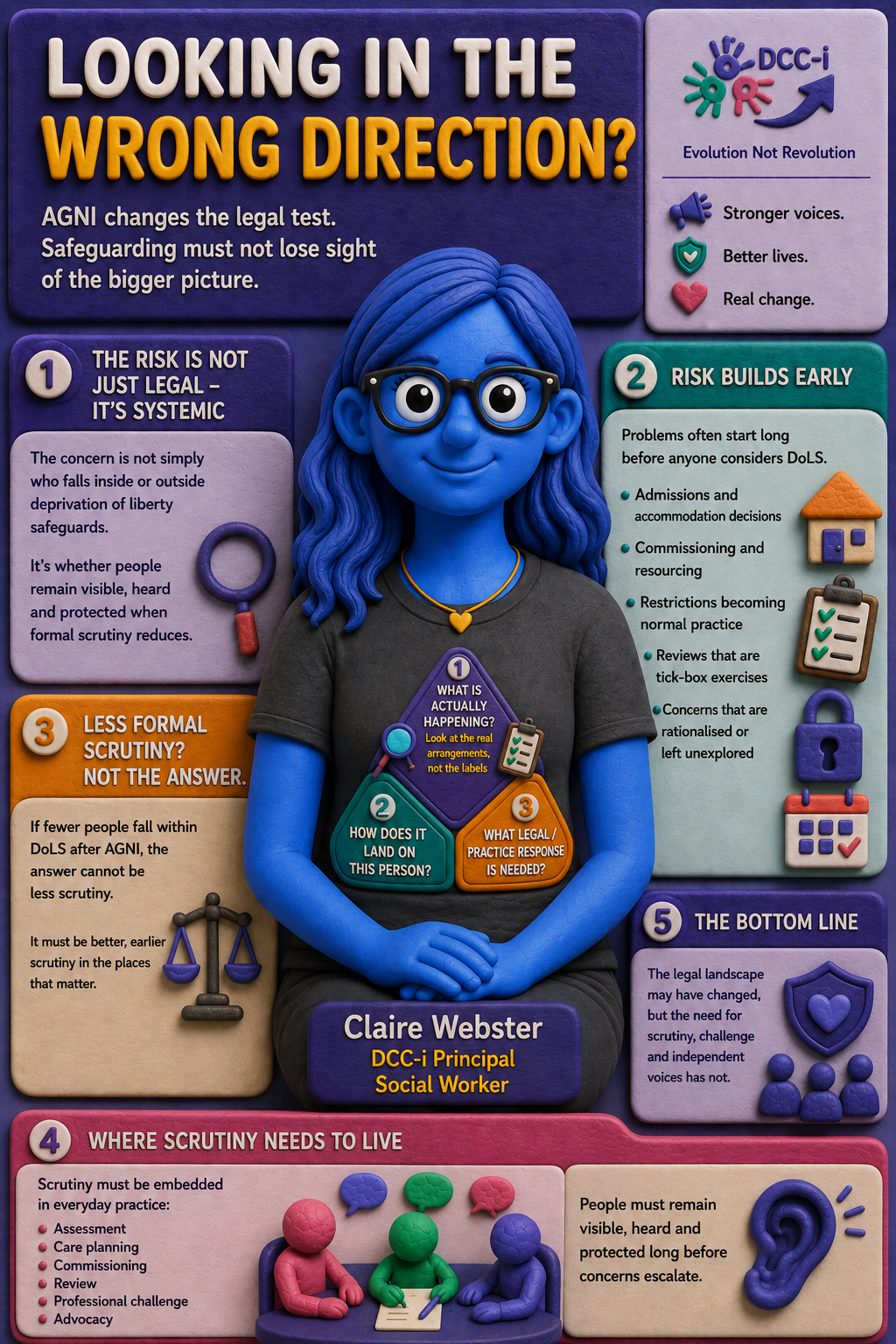


Claire Webster
Principal Social Worker, DCC-iFocus: MCA, DoLS, safeguarding, implementation and system practice.
MCA / DoLS / DoL / RIGHTS-BASED PRACTICE
Supporting organisations working with the Mental Capacity Act and Deprivation of Liberty.
Discover our infographics, tools, learning and reflective prompts which aim to embed rights-based, human-centred practice, developed by people with practical experience and specialist knowledge.

Critical friends for thoughtful MCA, DoLS, DoL and rights-based practice.
Orientation
Your MCA and Deprivation of Liberty workspace
Get your bearings: what this practice support space helps with, the practice boundary, and the expertise behind it.
Start here
You may have arrived here looking for practical MCA and DoLS support, or for help thinking through capacity, best interests, deprivation of liberty and rights-based practice.
This page brings together tools, briefings, visual summaries and reflection points for day-to-day decision-making, supervision, team discussion and professional CPD.
Use it when you need to revisit key principles, explore a practice theme, prepare for supervision, or slow down around a decision that feels complex, restrictive or uncertain.
Practice expertise behind this page
Shaped by DCC-i practitioners with deep experience across Mental Capacity Act practice, DoLS, deprivation of liberty, safeguarding, human rights and social care. It brings together legal literacy, practice wisdom, lived experience and reflective learning, keeping the support close to the decisions practitioners are actually facing.
Focus: MCA, DoLS, safeguarding, implementation and system practice.

Focus: Social work leadership, mental health, human rights, lived experience and reflective practice.
Use something now
Practical MCA and DoLS support, ready to use
The working console: briefings, visual summaries, tools and reflective prompts you can pick up straight away.
Ready to use now
Browse briefings, visual summaries, tools, prompts and selected links to support reflection, supervision, team discussion and rights-based decision-making.
Short DCC-i briefings and explainers for Mental Capacity Act, DoLS and deprivation of liberty practice.
Includes DoLS updates, AMHP briefings, best interests, Article 5 and least restrictive practice.
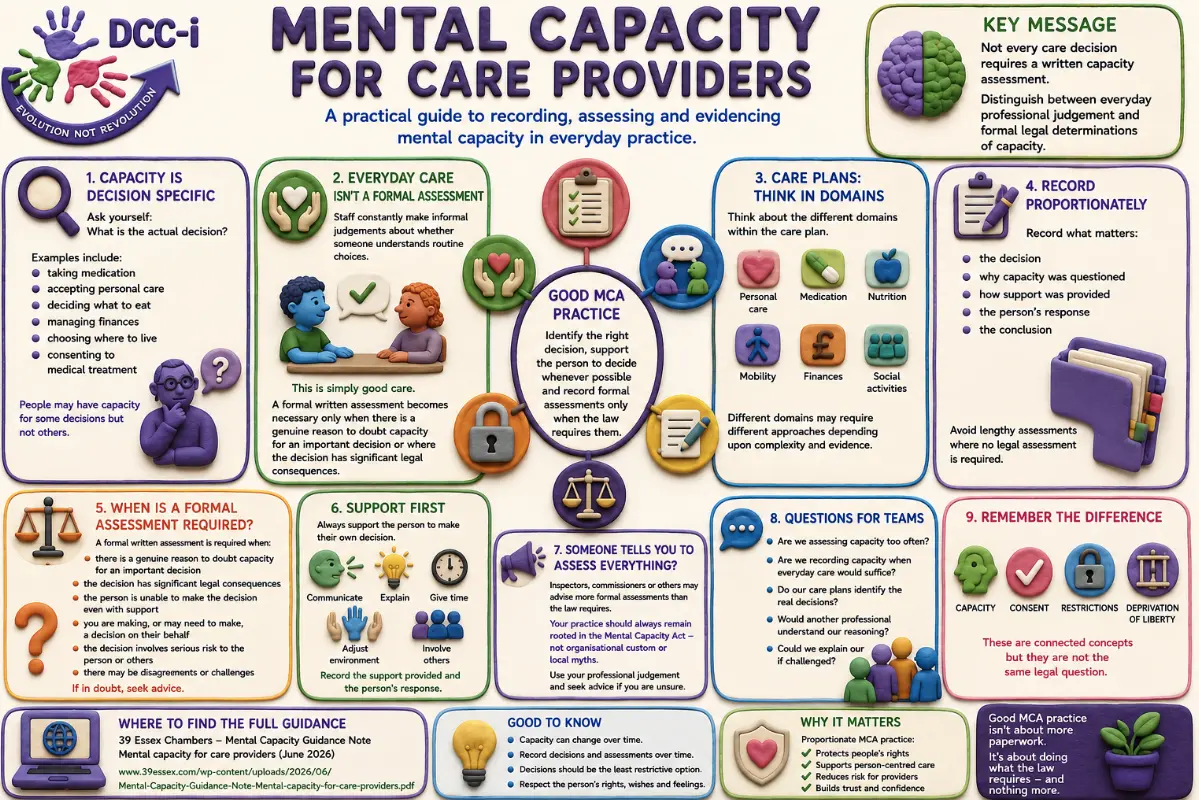
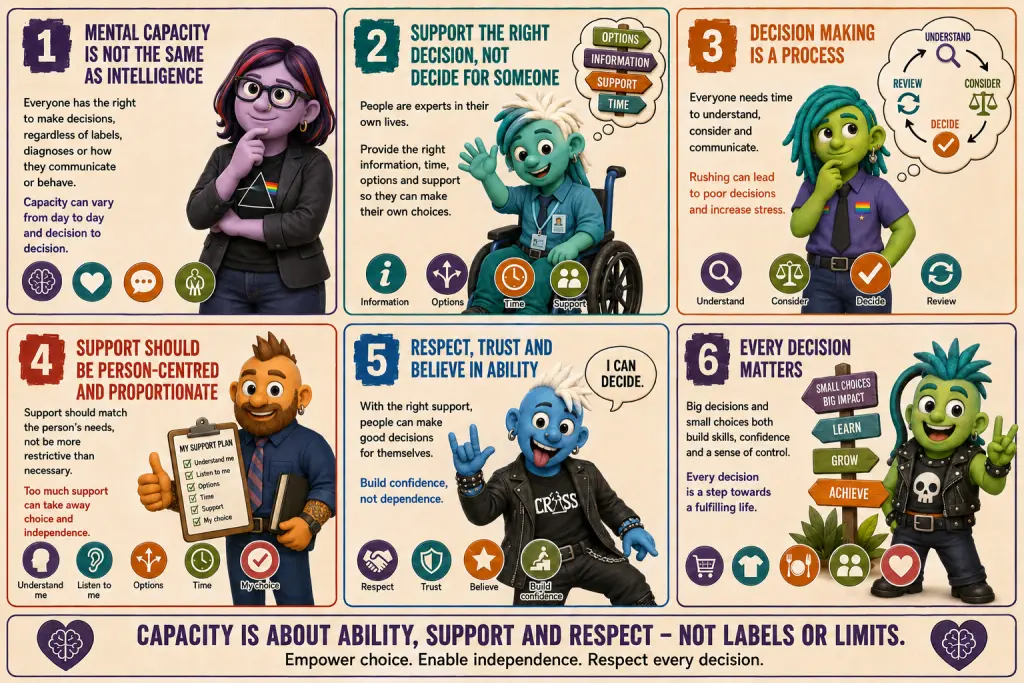
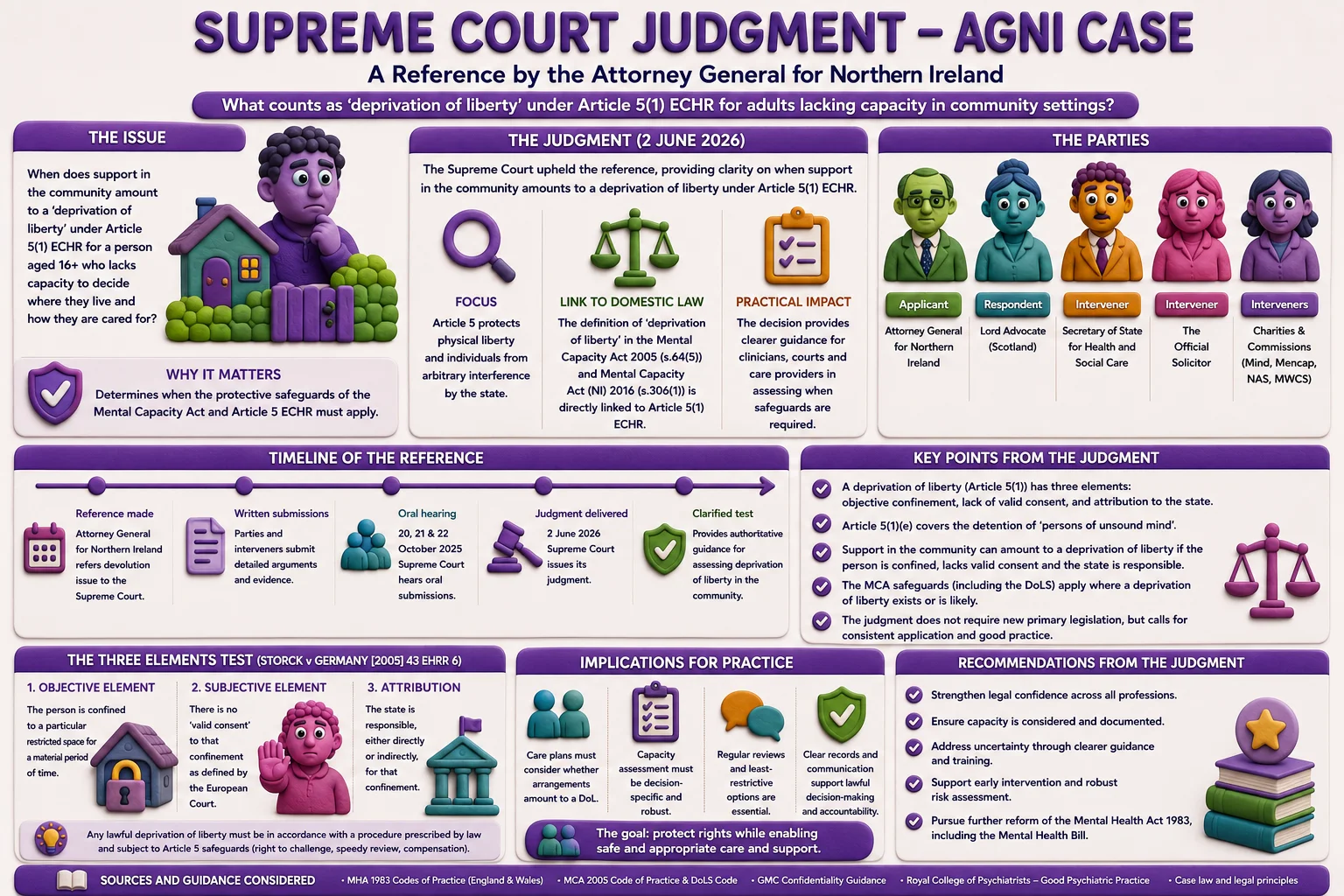
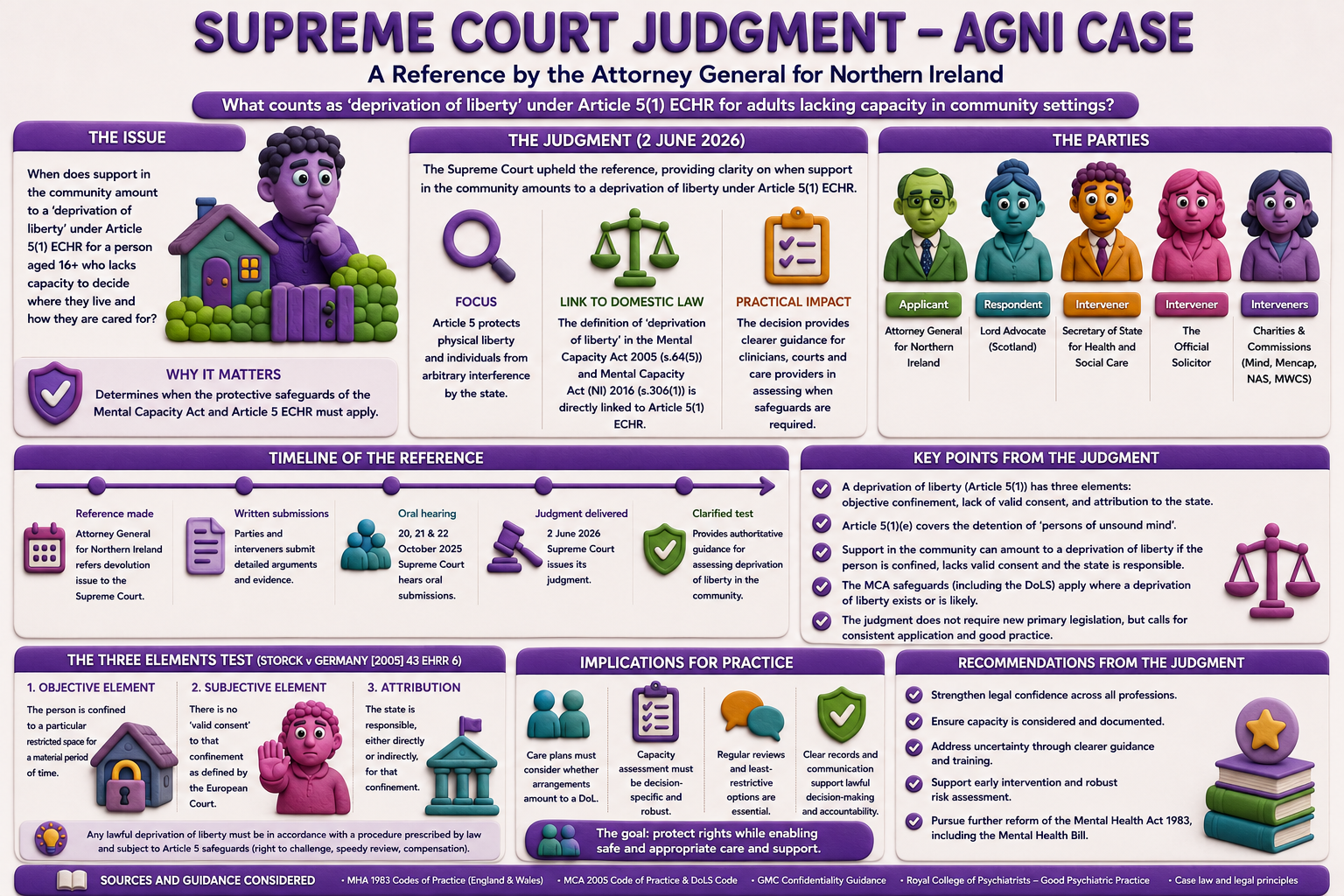
Create a free account to viewVisual summaries and practice diagrams for MCA, DoLS, supervision and rights-based decision-making.
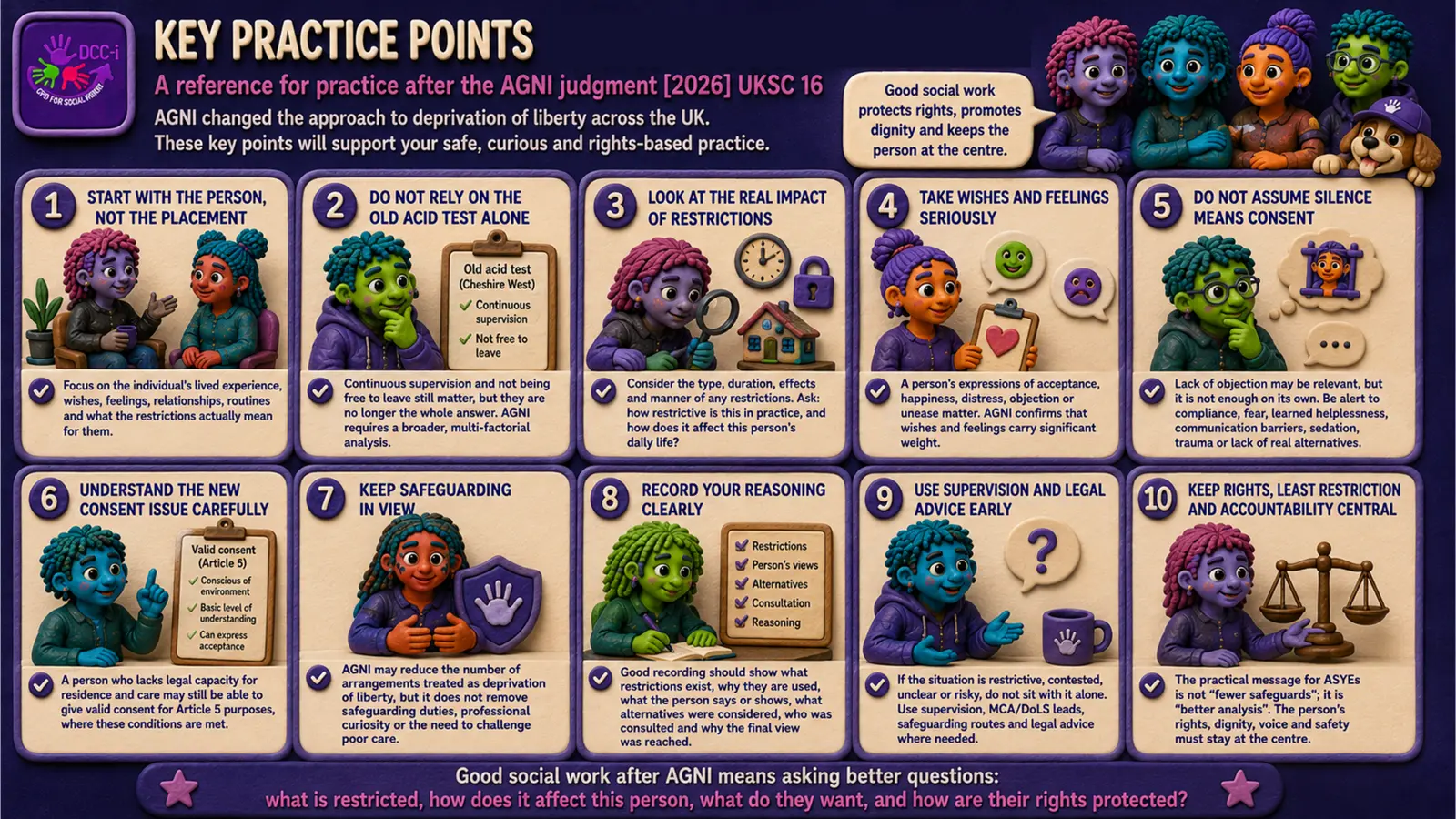
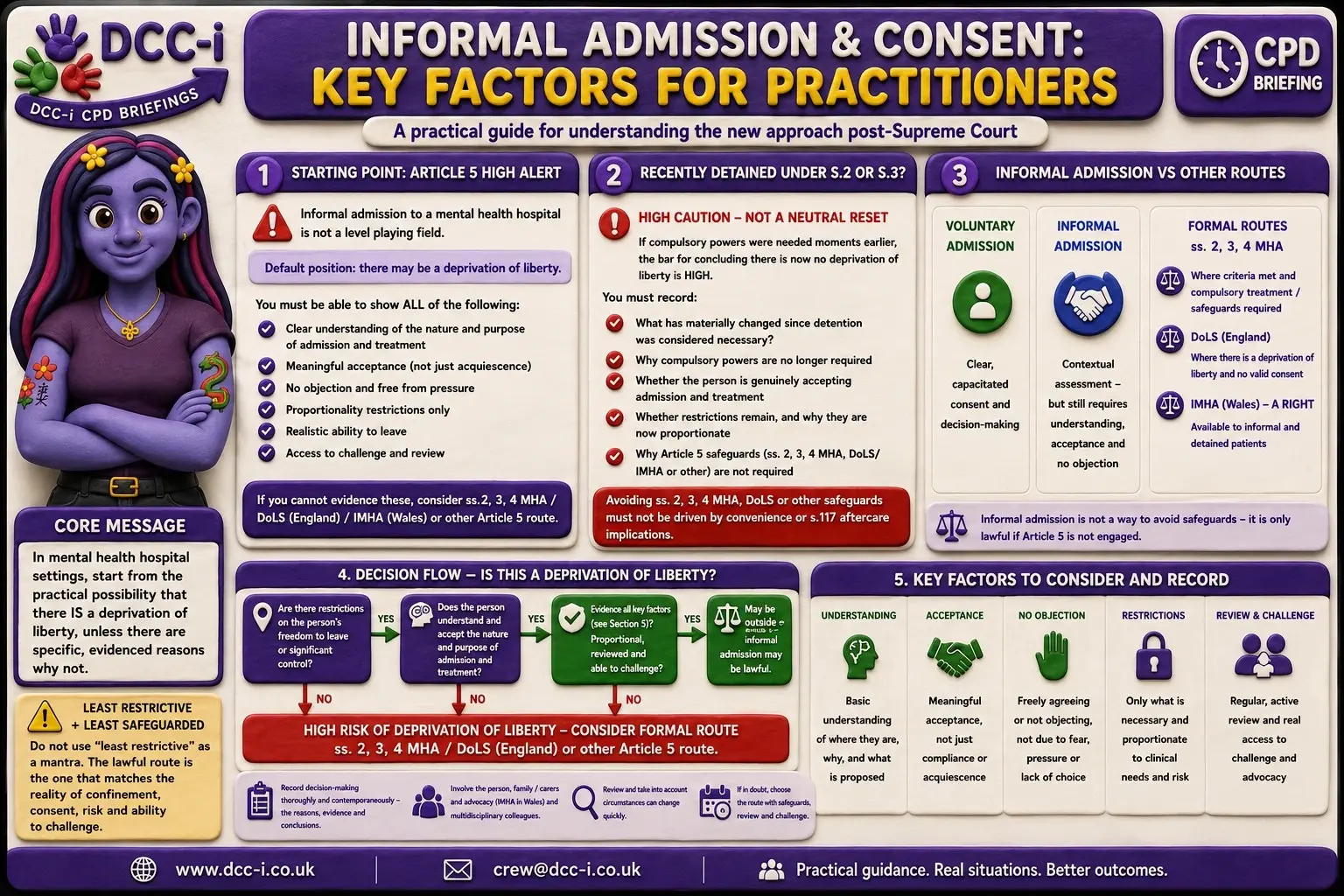
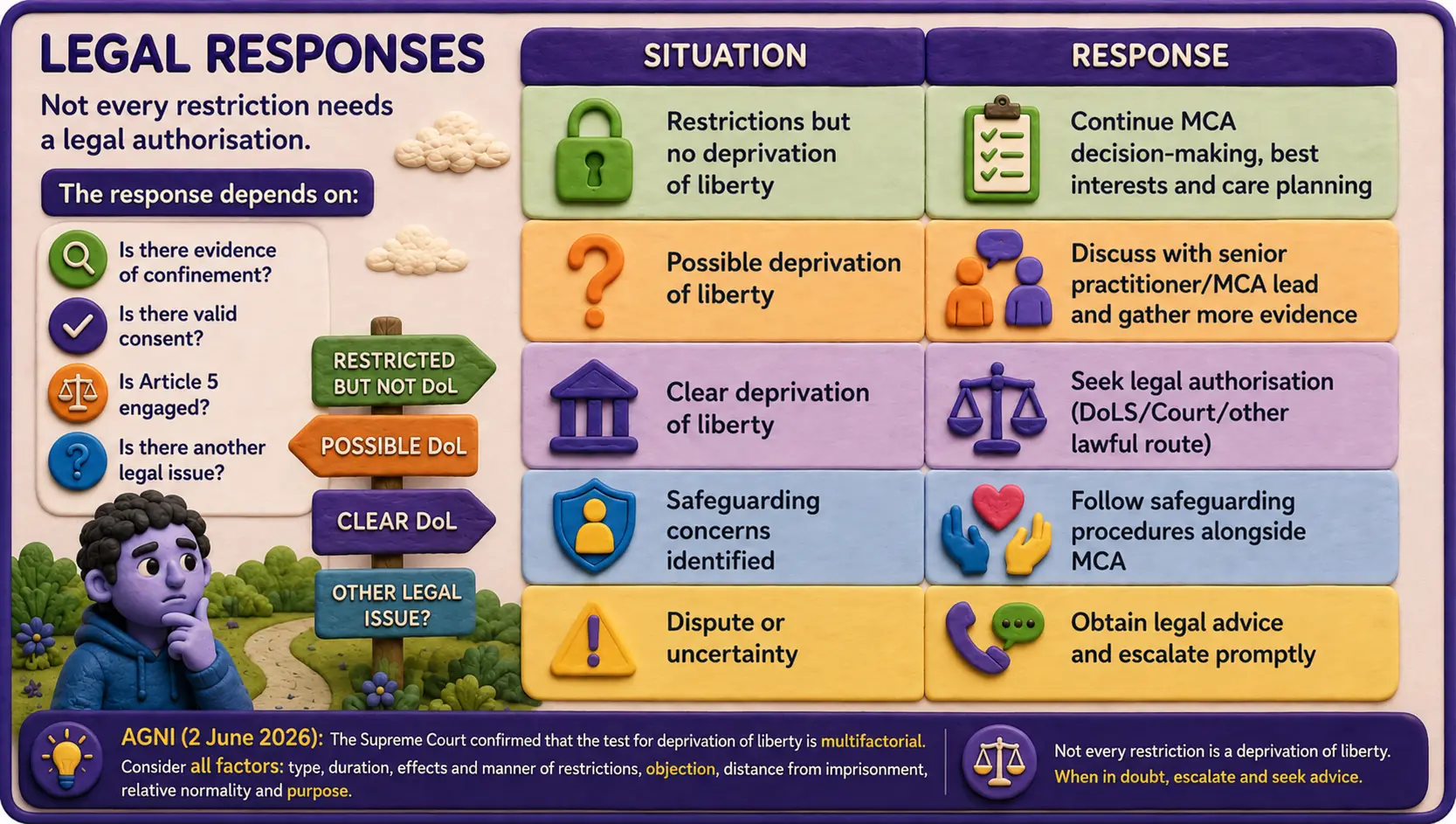
AGNI Triangle, 2026 DoL Judgment, Article 5, objection, wishes and feelings.
Create a free account to viewDecision aids, reflective tools and interactive apps for use in supervision, team discussion and day-to-day MCA decision-making.
Decision aids, reflective tools and interactive apps for MCA and deprivation of liberty practice.
Create a free account to viewSupervision prompts, team discussion prompts and reflective questions to use straight away.
Create a free account to viewInteractive games, quizzes and puzzles for MCA, DoLS and deprivation of liberty practice. Use them solo, in supervision or across a team session.
Create a free account to viewTop 5 quick links to guidance, commentary and reference points for MCA, DoLS and deprivation of liberty practice.
Create a free account to viewWork through a practice question
Navigate the practice, slow the thinking down
A guided space: route in by practice theme, then work through a decision with the supervision and team learning pathway.
Find support by practice question
Use these routes to find support by the practice question you are working with, from capacity assessment and best interests to deprivation of liberty, objection and supervision. Browse by practice theme is coming soon, so for now work through the reflective supervision pathway alongside the support that is ready to use.
1Browse by practice themeComing soon
We’re gradually building a wider library of MCA and DoLS support. Once there is enough content in each area, you’ll be able to explore it here by theme.
For now, the most useful place to start is the Ready to use now section above.
Theme filters will become available as more resources are added.
2Work through the pathway
A reflective route for MCA, DoLS and deprivation of liberty discussions.
Use this pathway to slow down MCA and deprivation of liberty decision-making in supervision, team meetings or individual reflection. It is designed to help people notice assumptions, hear the person more clearly and test whether restrictions are necessary, proportionate and rights-based.
This is a reflective practice pathway, not a legal decision tree. It does not replace legal advice, statutory guidance or local policy.
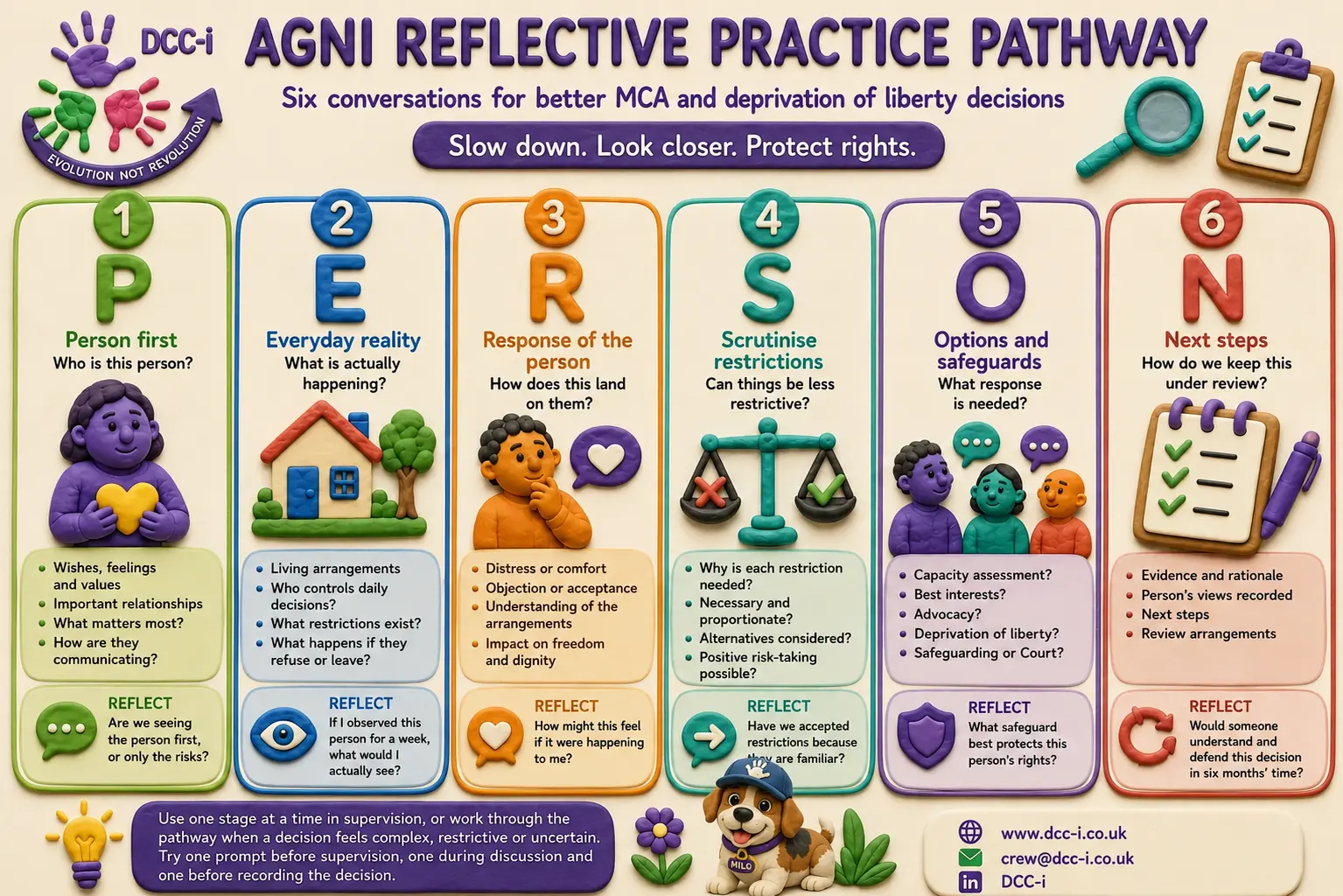
Use the visual pathway as a quick guide, then work through the expanded prompts below for discussion, supervision or recording.
Before discussing restrictions, understand the individual.
Are we seeing the person first, or only seeing the risks?
Move beyond care plans and labels.
If I observed this person for a week, what would I actually see?
The impact of arrangements matters, not just their existence.
How might this feel if it were happening to me?
Before asking whether there is a deprivation of liberty, ask whether there needs to be.
Have we accepted restrictions because they are familiar rather than necessary?
Only now consider the legal pathway.
What safeguard protects this person’s rights today?
Good practice means remaining reflective.
Would somebody reading this in court understand how I reached this decision?
Use one stage at a time in supervision, or work through the pathway when a decision feels complex, restrictive or uncertain. You might try one prompt before supervision, one during discussion and one before recording the decision.
Are you seeing a practice question in supervision, team discussion or day-to-day MCA work? Share the theme with us. We may use anonymised questions to shape future prompts, briefings and practice resources.
What do ‘objections’ look like?
Following the Supreme Court’s decision in AGNI, objections have become a central part of deciding whether a person may be deprived of their liberty. However, objections are rarely straightforward. They may be spoken (saying they want to go home even if this is without an understanding of the current situation), shown through behaviour (resistance or refusal of care), communicated non-verbally or understood through a person’s values, wishes, feelings and relationships. An objection may be consistent or fluctuate over time, and people may object to some restrictions but not others. Any suspicion that a person is unsettled or objecting must be highlighted with the local authority.
What is the difference between compliance, acquiescence and consent?
A person who appears cooperative is not necessarily giving valid consent. Someone may comply because they feel they have no alternative, acquiesce because they have become accustomed to restrictions, or they may be able to genuinely consent to a deprivation of liberty because they understand the arrangements and are able to make a free and informed choice (however this will need deeper exploration and evidence). Distinguishing between these concepts is essential in light of AGNI, as valid consent can prevent arrangements amounting to a deprivation of liberty, whereas mere compliance or acquiescence cannot.
When do restrictions turn into a deprivation of liberty?
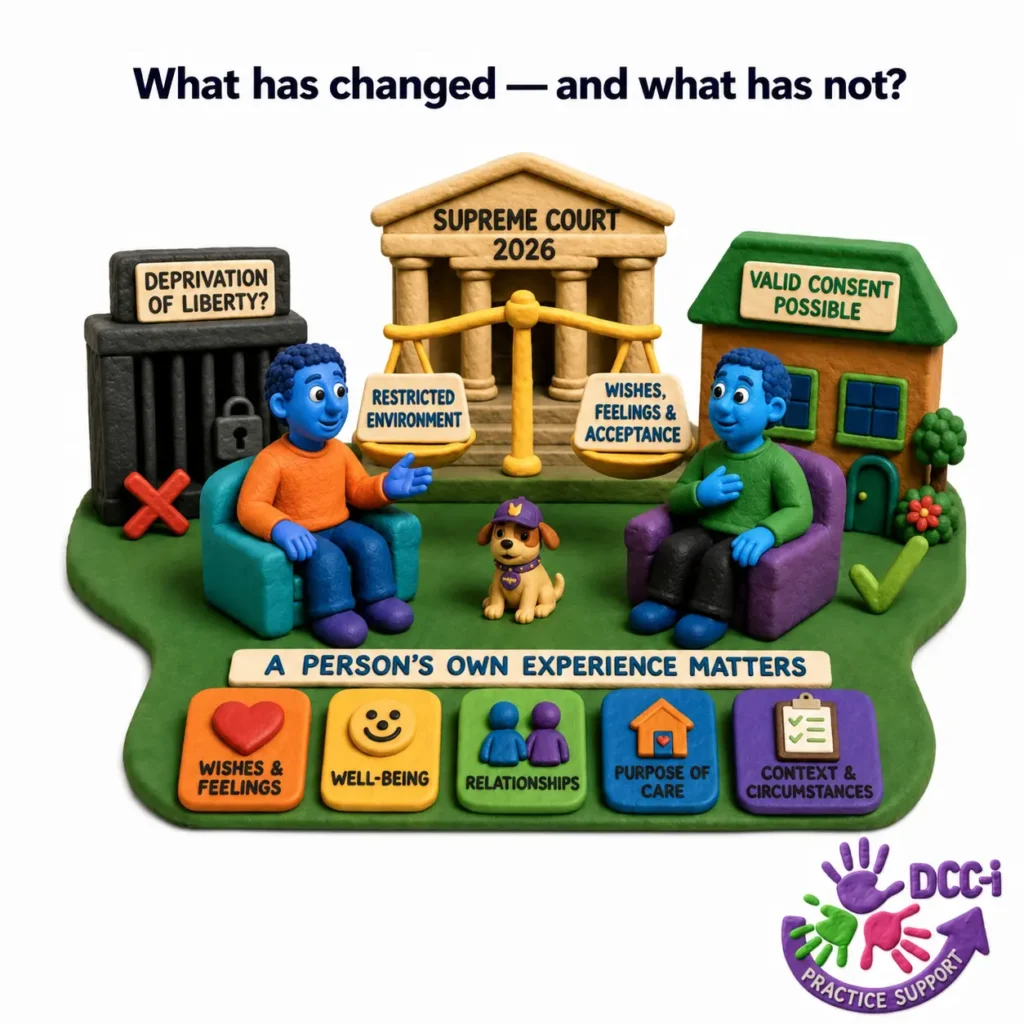
Not every restriction amounts to a deprivation of liberty. Care and support can involve measures that limit a person’s choices to keep them safe, but there comes a point where the nature, extent and impact of those restrictions require legal authorisation. Since AGNI, practitioners are reconsidering where that boundary lies and how the person’s own experience, objections and the overall circumstances influence the decision. Resistance or objections to the care arrangements may suggest a move towards a deprivation of liberty, and restrictions on contact may also push into the realm of a deprivation of liberty.
What evidence do we need to authorise a deprivation of liberty?
Good decisions depend on good evidence. If an authorisation is required, practitioners must be able to demonstrate why the legal threshold has been met (nature and severity), what restrictions are actually in place, how the person’s wishes and feelings have been considered, whether they are objecting, and why the arrangements are necessary and proportionate. Professionals and care home staff will now need to explain in more detail what arrangements are in place for a person, the impact and the reasons they are in place.
Before you share a question
Stay connected
A live practice support board
What practitioners are asking, what DCC-i is watching, and where to go next.
Public information · always free
MCA, deprivation of liberty and AGNI explained in plain English for people, families, carers and anyone trying to understand rights, restrictions and safeguards.
DCC-i keeps this information open so people can understand rights, safeguards and the questions they may want to ask.
No account, payment or portal access is needed.
Plain English · Rights-based · Public
Also useful for practitioners and teams
This section is mainly for people, families, carers and PWLE, but it may also help practitioners understand the questions people are likely to ask.
The Mental Capacity Act protects people aged 16 and over who may have difficulty making some decisions for themselves because of illness, disability or injury.
Sometimes a person’s care or support arrangements may restrict their freedom in a significant way. When this happens, professionals may need to consider whether legal safeguards are needed.
A deprivation of liberty can happen when someone’s care or support arrangements restrict their freedom in a significant way.
This might include situations where a person needs a high level of supervision, is not free to leave, or has restrictions placed on their day-to-day life to keep them safe.
The law provides safeguards to make sure any deprivation of liberty is lawful, necessary, proportionate and regularly reviewed. These safeguards are there to protect people’s human rights.
The AGNI judgment encourages professionals to look at the person’s whole situation – not just whether they are supervised and controlled, but how restrictions affect them, whether they understand what is happening, and whether they object or appear distressed.
For many people, day-to-day care may not change straight away. What may change is how professionals explain, record and review whether safeguards are needed.
For many people, day-to-day care and support may not change straight away.
What may change is how professionals think about, explain, record and review whether legal safeguards are needed.
Families and carers may want to ask what restrictions are in place, why they are needed, how the person’s views are being understood, and when the arrangements will be reviewed.
The law and practice in this area are still developing. As national guidance, local policies and practice resources become available, DCC-i will add updates to this page.
What we’re watching
Last reviewed: 16 June 2026
The live briefing board is also public and will be updated as guidance, commentary and resources develop.
View live briefing boardWhat is AGNI, and does it mean DoLS no longer exist?
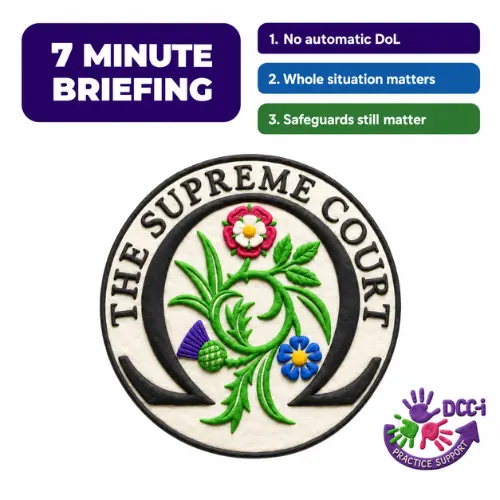
AGNI is the shorthand for the Supreme Court judgment A Reference by the Attorney General for Northern Ireland [2026] UKSC 16. It changes the legal analysis used to decide whether someone is deprived of their liberty under Article 5, so professionals now look at the person’s whole situation rather than a single checklist. It does not abolish DoLS: the statutory safeguards and routes for authorisation remain in place, and restrictive care arrangements must still be scrutinised. You can read more in the family and carer questions.
My dad made a decision that I think is unwise. Does that mean he lacks capacity?
No. People have the right to make decisions that others disagree with. Making a risky or unwise decision does not automatically mean a person lacks capacity.
My mum can still hold a conversation. Why are professionals assessing her capacity?
Capacity is not decided by whether someone can chat, remember isolated facts or appear confident. For the particular decision, professionals must consider whether the person can understand, retain, use or weigh the relevant information and communicate a decision. Any inability must be because of an impairment of, or disturbance in, the functioning of the mind or brain. Capacity is decision-specific and time-specific.
Who decides whether someone has capacity?
The person responsible for making or implementing the particular decision will usually need to be satisfied about capacity. This is often a health or social care professional, but it depends on the decision and circumstances. Before concluding that someone lacks capacity, all practicable steps must be taken to support them to decide for themselves.
Where next?
Whether you are an individual practitioner or supporting a wider team, DCC-i can help you keep learning, reflecting and applying MCA, DoLS and deprivation of liberty practice with confidence.