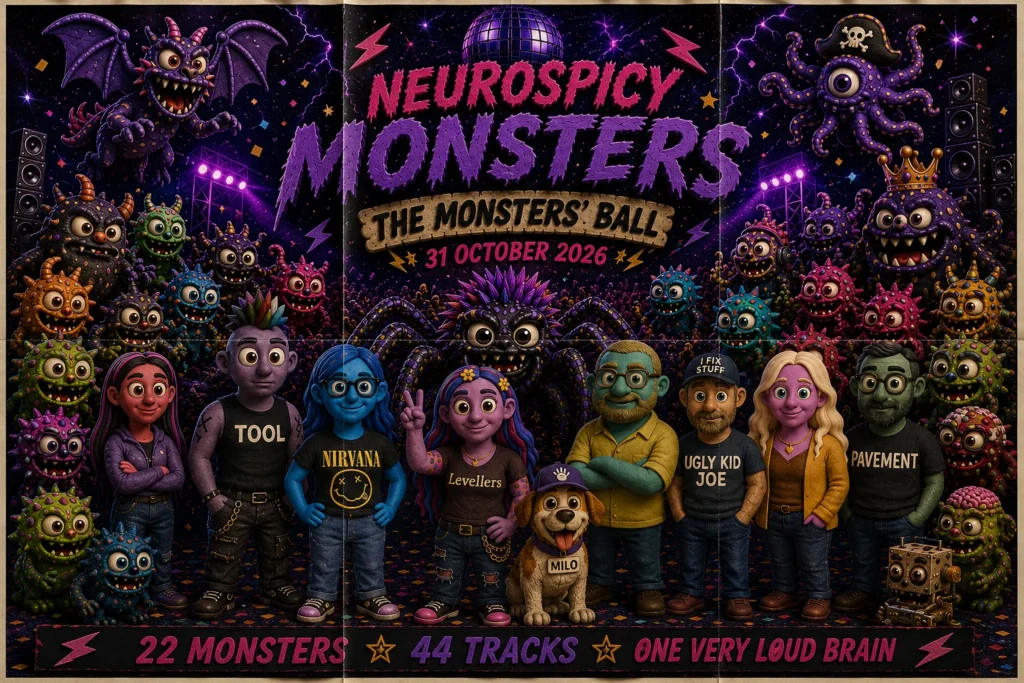
About this page. The ADHD Awareness Month journal turns recurring ADHD challenges into characters: 22 Monsters, and Barry, the spider who helps find a way through the chaos they create. This page gathers their artwork with the descriptions, warning signs and taming tools printed on each Monster’s booklet page in the journal’s collectors’ LP. The descriptions are transcribed from that artwork; this introduction and the headings are new.
Why Monsters?
Giving them a face and a personality simply gives us another way of talking about something complicated without reducing ourselves, or anyone else, to a list of deficits.
From the series introduction
Read the whole idea in ADHD Awareness Month: life as an ADHD social worker. Each Monster’s theme tune and Barry’s answering B-side are on the collectors’ LP page.
Barry, keeper of the web
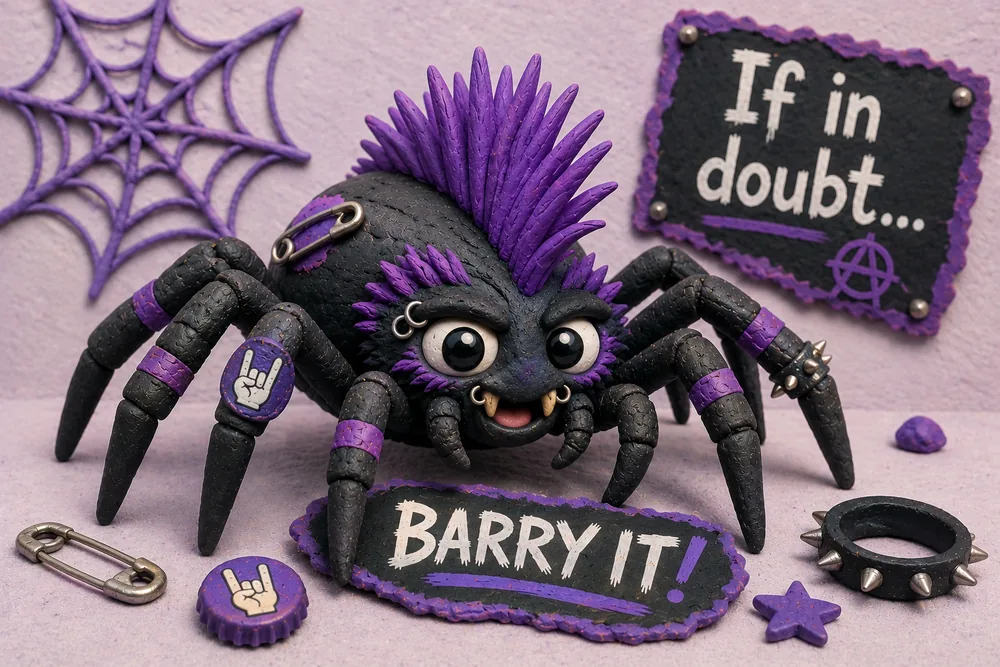
You’ll also meet Barry. He’s a spider. Before you panic, Barry isn’t the problem. He’s the keeper of the web. While the Monsters create chaos, Barry quietly helps us find our way through it.
From the series introduction
Meet him properly in So… Let Me Introduce You to Barry.
The Monsters
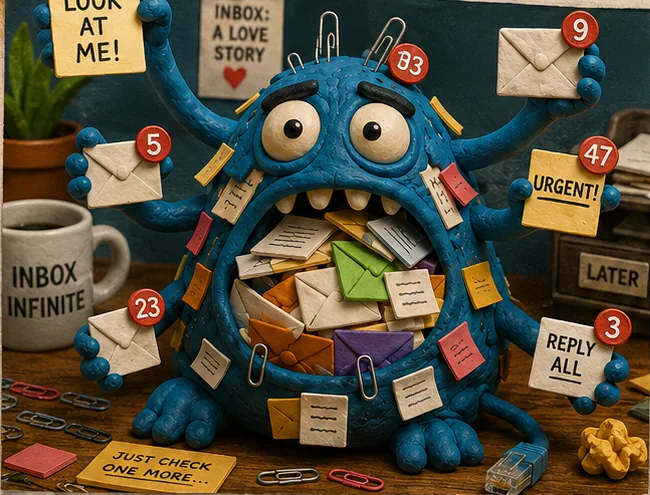
01 · Inbox Monster
A.K.A. Overwhelm Gremlin
Lives in your inbox and feeds on urgency, other people’s priorities and unclear messages. Thrives on clutter and guilt. Gets LOUD when things pile up.
Watch for: Hundreds of unread messages; Decision paralysis; Guilt spirals; Avoidance loops; Physical stress responses.
Taming tools: Shrink the Batch: Limit how many you open at once. Sort & Signal: Flag, filter, archive. Then choose. Time Box It: Set a timer. Work. Close. Move on. Future You: Schedule a reply instead of holding it all now. Ask for Support: It’s not failure to share the load.
Spotted in the wild: Inbox (obviously); Notifications; Unclear deadlines; Other people’s emergencies; Last thing at night; First thing in the morning.
Barry says: “Find the thread. Follow it.”
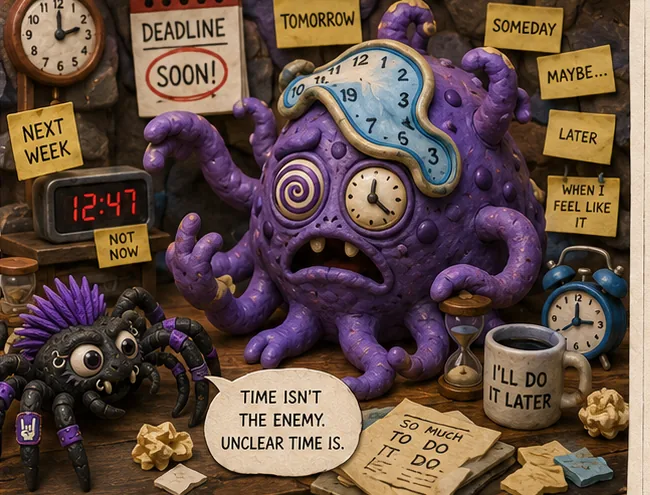
02 · Time Monster
A.K.A. Time-Warp Trickster
Distorts time. Makes urgent feel far away and far away feel urgent. Steals focus, melts minutes and traps you in “I’ll do it later”. Fears clarity, structure and finishing.
Watch for: Underestimating how long things take; Losing track of time completely; Chronic lateness or time anxiety; Leaving everything to the last minute; Decisions that create more delay.
Taming tools: Reality Check: Look ahead. What’s real, what’s a guess, what’s a worry? Time Box It: Set a timer. Give time a shape so it can’t shapeshift. Chunk & Start: Break it down. Start small. Momentum creates time. Visualise It: See your time. Diarise it. Protect it. Ask for Support: Perspective helps you plan better and stick with it.
Spotted in the wild: Vague tasks and unclear deadlines; Too many open loops; Distractions and task switching; No time estimates; “I’ll do it when…” thinking.
Barry says: “Follow the thread. Finish the step.”
Read Day 2 · Theme tune and sleeve notes · Back to the list
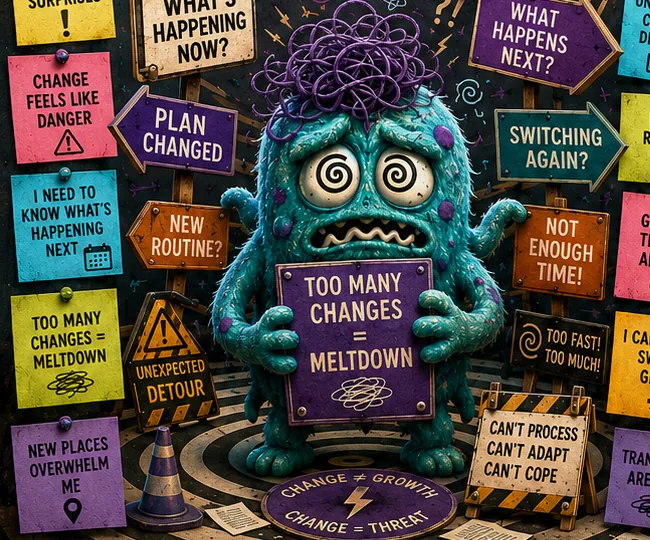
03 · Transitions Monster
A.K.A. Switch-o-Saurus
Hates change, switching, endings and starting. Gets stuck between what was, what is and what could be. Overthinks the gap. Avoids the doorway. Drains energy fast.
Watch for: Freezing at handovers; Needing “just five more minutes”; Avoiding endings; Chaotic pivots; Decision fatigue.
Taming tools: Transition Timer: Build a visible buffer between things. Finish First: Close the loop before you open the next one. Bridge the Gap: Use a tiny next step to create momentum. Visual Cue: External cues reduce the mental switch cost. Breathe & Reset: Regulate first, then choose again.
Spotted in the wild: Changing plans at the last minute; Sudden new tasks; Moving between systems; New environments; Even good changes!.
Barry says: “Build the bridge. Cross it slowly. You’ve got this.”
Read Day 3 · Theme tune and sleeve notes · Back to the list
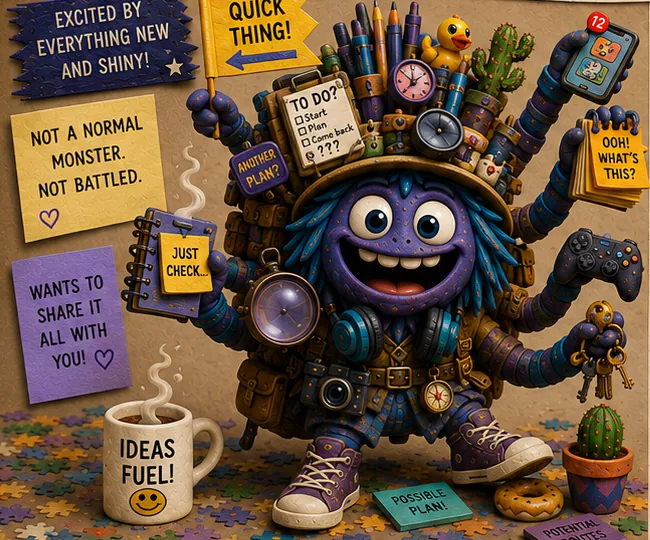
04 · Side Quest Monster
A.K.A. Distractor Extraordinaire
Excited by everything new and shiny. A distractor, not an enemy. Loves to share ideas, routes, plans and possibilities. Not mean, just easily distracted and incredibly enthusiastic.
Watch for: Jumping topics mid-sentence; Opening “just one more” tab; Starting new projects constantly; Forgetting the original plan; Over-excitement and info-dumping.
Taming tools: Capture & Park: Grab the idea. Write it down. Park it for later. Return Anchor: Use a word, sound or object to return to the quest. Time Check: Set a time to explore, then set a time to return. Share & Shelf: Listen, celebrate, then shelf it for later, not forever. Quest Anchor: When in doubt, return to the main quest.
Spotted in the wild: Message threads; Browser tabs & bookmarks; Planning apps & notes; Stationery shops & online carts; New routes to anywhere.
Barry says: “Notice. Capture. Come back. Continue. That’s the way!”
Read Day 4 · Theme tune and sleeve notes · Back to the list
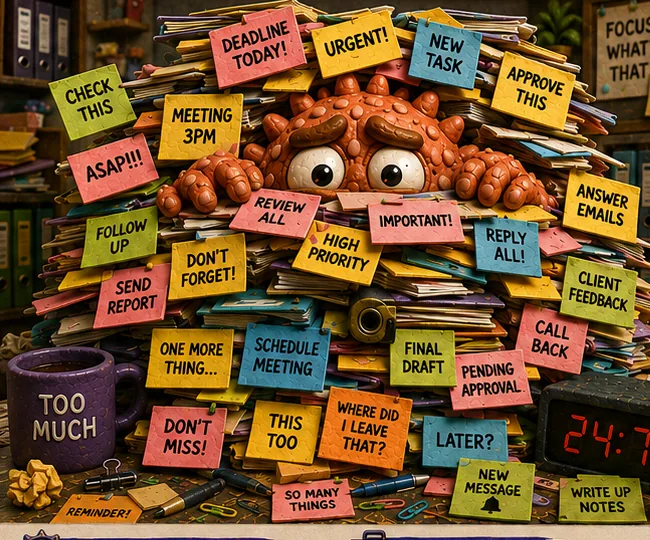
05 · Overwhelm Monster
Too much. Too many. Can’t filter. Can’t stop.
The Overload Monster shows up when everything feels urgent, important or both. It loves chaos, clutter and ALL THE THINGS. It doesn’t mean you’re lazy – it means your system is overloaded.
Watch for: Brain fog & scattered focus; Constant context switching; Procrastination or avoiding starts; Feeling behind no matter what; Physical stress & exhaustion.
Taming tools: Dump & Declutter: Get it all out. Brain dump everything. Sort & Filter: Sort by must do, should do, could do, delete. Prioritise Ruthlessly: What matters most right now? Time Block: Give each task a time and a home. One Next Step: Focus on the next right step, not the whole staircase. Park the Rest: Trust your system. Come back later.
Spotted in the wild: Overflowing inboxes; 47 open tabs; Sticky notes everywhere; Unfinished projects; Overbooked calendars; Late night “catch up” spirals.
Barry says: “Notice. Capture. Come back. Continue. That’s the way!”
Read Day 5 · Theme tune and sleeve notes · Back to the list
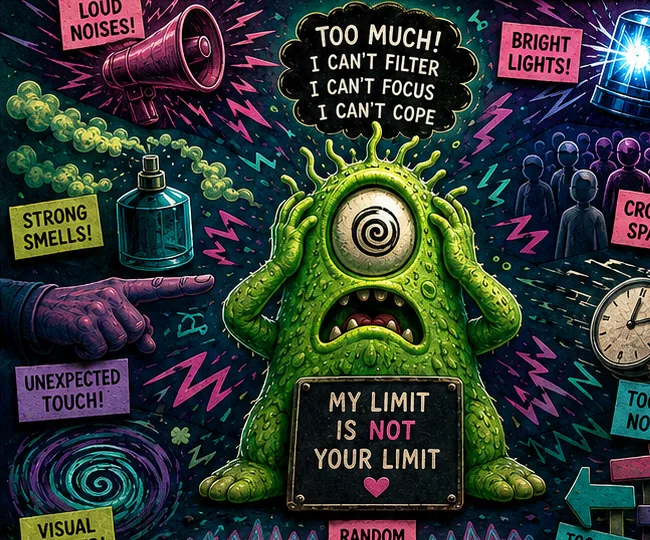
06 · Sensory Overload Monster
Too much in. Too fast. My system can’t keep up.
The Sensory Overload Monster appears when too much comes in at once. It bombards you with input until your brain and body say “enough”. It’s not being dramatic – it’s your system’s alarm.
Watch for: Irritability & meltdowns; Shutting down or zoning out; Headaches & body tension; Needing to escape or hide; Feeling “on edge” all the time.
Regulation tools: Reduce Input: Lower the volume. Dim the lights. Do less. Create Space: Step away. Earplugs. Sunglasses. Quiet corner. Ground & Breathe: Feel your feet. Slow breaths. Name 5 things you see. One Thing Focus: Do one thing at a time. Keep it small and steady. Reset & Recover: Rest. Hydrate. Move gently. Come back when ready.
Spotted in the wild: Busy shops & supermarkets; Crowded events & queues; Bright screens & notifications; Strong smells or perfumes; Overbooked days & tight deadlines.
Barry says: “Notice. Capture. Come back. Continue. That’s the way!”
Read Day 6 · Theme tune and sleeve notes · Back to the list
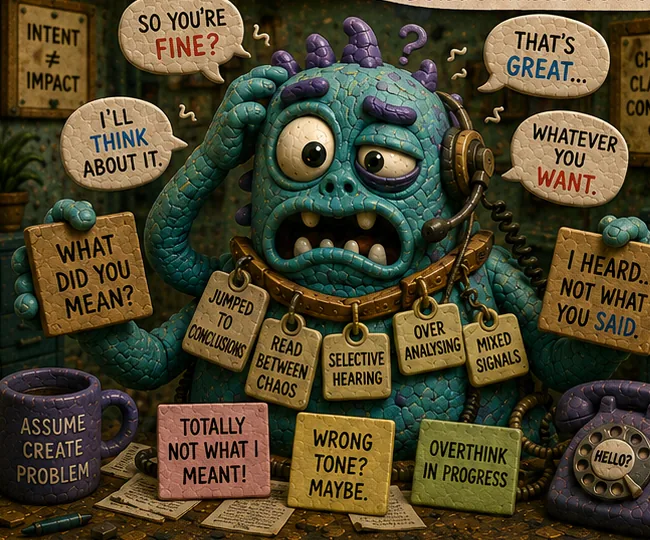
07 · Misunderstanding Monster
Twists words. Misreads tones. Builds walls out of mistakes.
The Misunderstanding Monster twists words, misreads tones and makes assumptions instead of asking. It creates distance through confusion and pride. But connection is possible – with clarity, kindness and curiosity.
Watch for: Misquotes & half listening; Defensive reactions; Assuming without asking; Misreading sarcasm, tone or intent; “I didn’t mean it like that!” spirals.
Communication tools: Check & Clarify: Ask what they meant. Listen fully. Reflect & Repeat: Mirror back what you heard. “Let me get this right…” Tone Check: Name the tone. Ask if you’re off. Curiosity First: Ask open questions. Stay curious, not certain. Repair & Reconnect: Apologise if needed. Try again. Do better.
Spotted in the wild: Text messages; Group chats; Work emails & meetings; Family conversations; Social media replies; Inside your own head.
Barry says: “Notice. Capture. Come back. Continue. That’s the way!”
Read Day 7 · Theme tune and sleeve notes · Back to the list
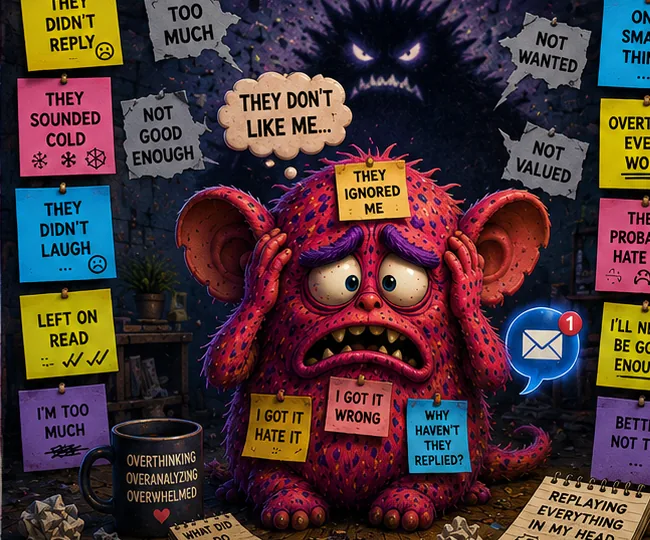
08 · Rejection Monster
Small signs. Huge meanings. Rejection hurts more than it should.
The Rejection Monster feels small signs as huge threats. It turns moments into meaning that may not be there. It protects the heart by assuming the worst.
Watch for: Overthinking tiny details; Reading tone that isn’t there; Needing constant reassurance; Withdrawing or shutting down; Feeling like a burden.
Sensitivity tools: Check the Facts: Notice what really happened. Zoom Out: What will this mean in a week? A month? A year? Ask for Clarity: Don’t guess—communicate. Challenge the Story: What else could this mean? Self-Compassion Break: Kind words. Deep breaths. You’re doing your best.
Spotted in the wild: Texts & DMs; Group chats; Social media posts; Classroom & work feedback; Everyday interactions.
Barry says: “Notice. Capture. Come back. Continue. That’s the way!”
Read Day 8 · Theme tune and sleeve notes · Back to the list
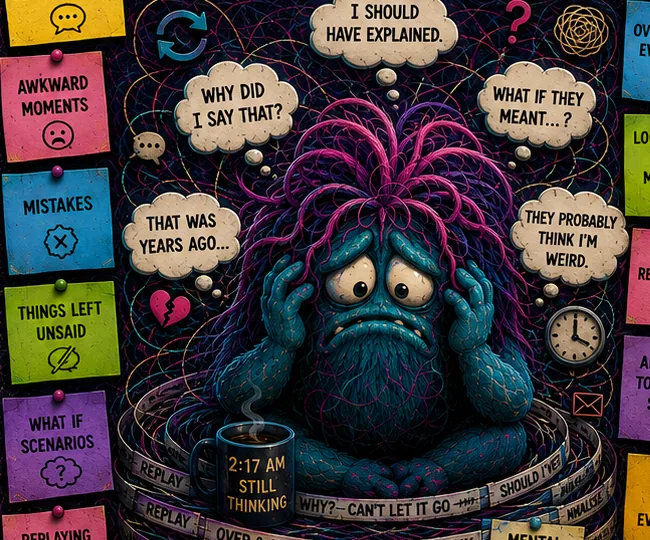
09 · Rumination Monster
Replay. Reanalyse. Rewind. My brain won’t let it go.
The Rumination Monster replays things over and over. It searches for meaning, answers and control. But the more it analyses, the more exhausted it gets.
Watch for: Replaying conversations; Analysing past events; ‘What if’ thinking; Mental time travel; Struggling to let go.
Thought tools: Name It to Tame It: Say what you’re thinking. Limit the Loop: Set a time, then let it go. Reality Check: What’s true right now? Kind Self-Talk: Speak to yourself like a friend. Shift Your Focus: Do something that matters.
Spotted in the wild: Lying awake at night; Re-reading old messages; Overanalysing small things; Seeking constant reassurance; Replay in head on repeat.
Barry says: “Notice. Capture. Come back. Continue. That’s the way!”
Read Day 9 · Theme tune and sleeve notes · Back to the list
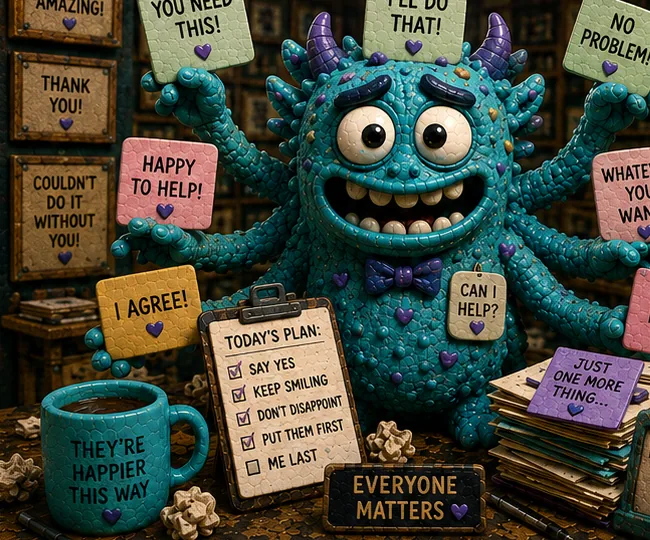
10 · People Pleasing Monster
Says yes when you want to say no. Loses you in the process.
The People Pleasing Monster lives for approval and avoids conflict at all costs. It overcommits, overgives, and over-apologises. It forgets that you matter too.
Watch for: Saying yes out of guilt; Difficulty setting boundaries; Over-explaining and apologising; Feeling resentful or drained; Ignoring your own needs.
People pleasing tools: Pause & Check In: What do I need? Boundaries Are Kind: A clear no helps everyone. Worth Isn’t Earned: You matter—always. Balanced Giving: Give freely, not excessively. Celebrate You: Your needs count too.
Spotted in the wild: Taking on extra work; Always volunteering; Avoiding tough conversations; People apologising too much; Saying “yes” when upset.
Barry says: “Not everyone gets a vote on your journey.”
Read Day 10 · Theme tune and sleeve notes · Back to the list
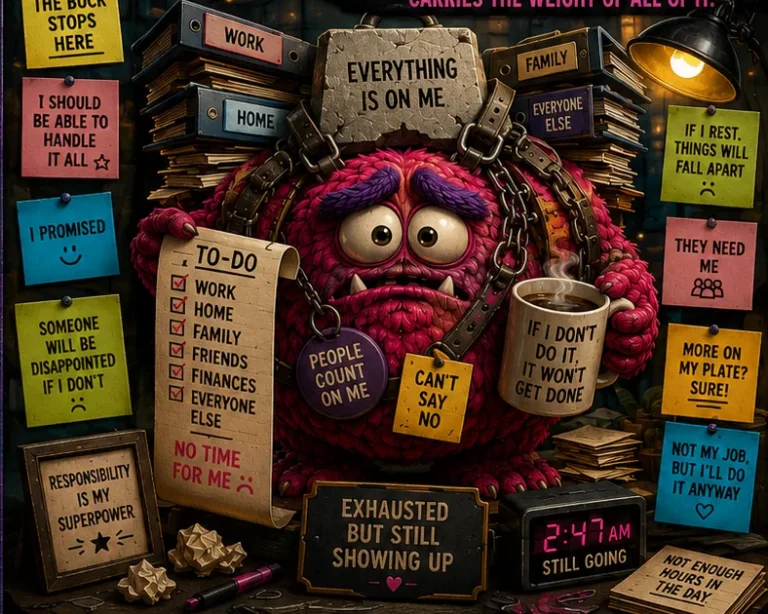
11 · Responsibility Monster
Takes on everything. Can’t let go. Carries the weight of all of it.
The Responsibility Monster believes it’s safer to carry everything than risk letting anything go. It confuses being needed with being worthy. It thinks rest = failure.
Watch for: Overcommitting; Difficulty delegating; Guilt when resting; Saying yes to everything; Neglecting own needs.
Responsibility tools: Reality Check: Is this really mine to carry? Delegate & Trust: Share the load. Others can help. Rest Without Guilt: Rest is not quitting. Priority Picker: Not everything is urgent. Say No, Stay Kind: Boundaries are self-respect.
Spotted in the wild: Volunteering for everything; Staying late constantly; Fixing others’ problems; Apologising for taking breaks; Feeling anxious when idle.
Barry says: “You’re allowed to put it down. I got this.”
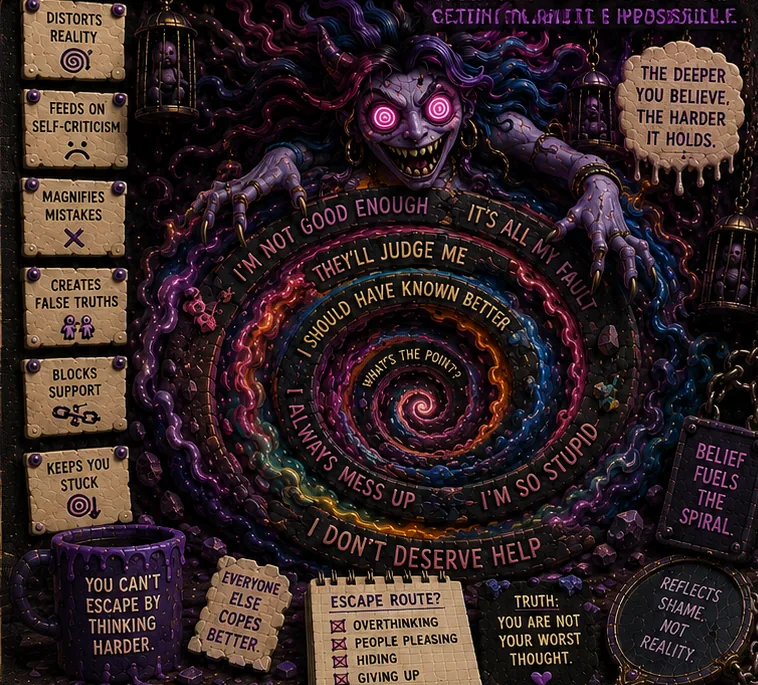
12 · The Shame Spiral
The Shame Spiral traps you in cycles of negative thinking. It convinces you the bad thought is true, when it’s really just a painful story on repeat.
Watch for: Rumination loops; Harsh self-talk; Feeling stuck or frozen; Believing you’re not enough; Avoiding connection.
Escape tools: Name the Story: What’s the thought? Check the Truth: Is that 100% true? Break the Loop: Do something different. Reach Out: Shame shrinks in connection. Self-Compassion: You’re human. Be kind.
Spotted in the wild: Replaying mistakes; Comparing yourself; Social media spirals; Late night overthinking; Isolating.
Remember: You fell in. But you can climb out. One choice. One breath. One step. At a time.
Barry says: “Drop it. Breathe. Move forward. You’re allowed.”
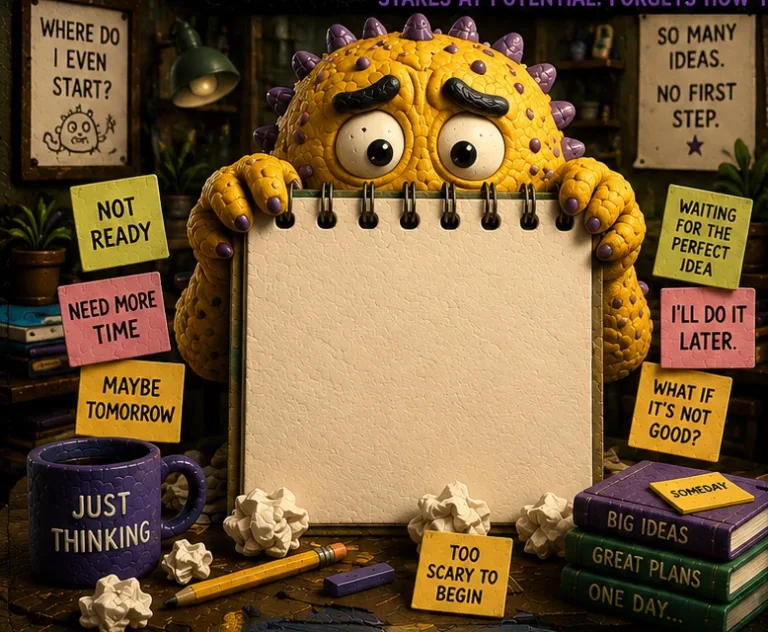
13 · Blank Page Monster
Stares at potential. Forgets how to begin.
The Blank Page Monster is paralyzed by potential. It overthinks the beginning and fears wasting a good idea. It confuses preparation with progress.
Watch for: Endless planning; Perfectionism; Procrastination loops; Idea collecting; Avoiding first steps.
Creative tools: Tiny Start: Shrink it down. What’s the tiniest step you can take right now? Messy First Draft: Make it bad on purpose. Get it out. Time Box: Set a short timer. Create in it. Good Enough Rule: Progress > Perfection. Accountability Buddy: Show up for someone. Get support.
Spotted in the wild: Staring at empty docs; Rewriting outlines forever; Saving ideas, never using them; “I’ll do it when I feel ready”; Comparing instead of creating.
Barry says: “Feel the kick. Move your body. Start now!”
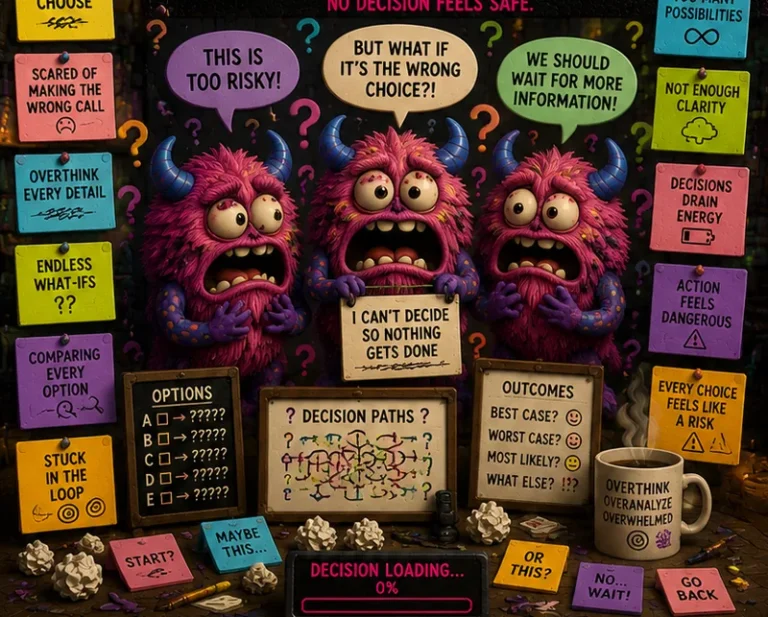
14 · Decision Paralysis Monster
Too many options. Too many outcomes. No decision feels safe.
The Decision Paralysis Monster appears when fear, doubt, and overthinking collide. It traps you in endless loops where every path seems risky and no choice feels like the right one.
Analysis overload class: Overthinker: analyses every angle until the mind overloads.; Risk Avoider: fears making the wrong choice more than missing the right one.; Indecision Loop: repeats the same thoughts without ever moving forward.
Watch for: Overthinking every option; Avoiding decisions; Seeking constant reassurance; Fear of regret; Delaying until it hurts.
Decision toolkit: Limit & Commit: Set a time limit. Decide. Move. Good Enough Rule: Done > perfect. Pick and progress. Tiny Next Step: Break it down. Take one small action. Trust Your Future Self: Future you will thank you for deciding.
Spotted in the wild: Creative projects; Big life decisions; Shopping for anything; Choosing dinner; Answering “What do you want to do?”.
Remember: You can’t control every outcome. You can only choose your next move.
Barry says: “Pick a lane. Any lane. Just move.”
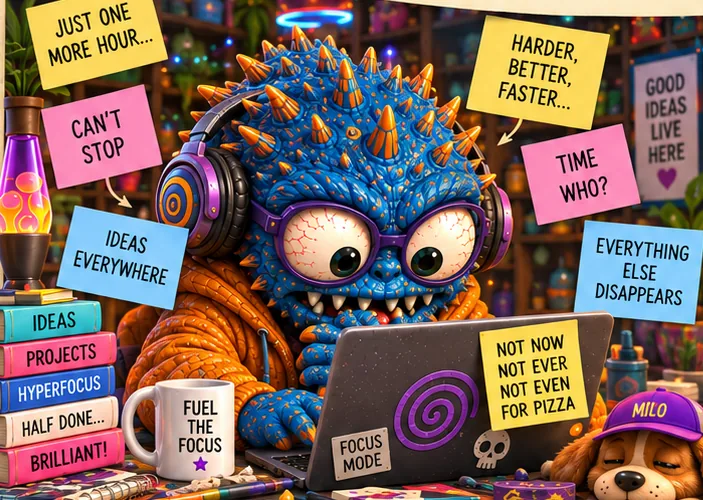
15 · Hyperfocus Monster
A.K.A. Tunnel Vision
Hyperfocus Monster dives deep into the things that interest them. It can bring amazing creativity, energy and productivity, but it can also make time disappear, everyday tasks get missed and the outside world fade away. It’s not about being lazy or stubborn — it’s my brain locking in. With the right support, hyperfocus can be a huge strength.
Watch for: Losing track of time; Missing meals or movement; Ignoring messages or other tasks; Struggling to switch or stop; Feeling frustrated when interrupted; Guilt or overwhelm afterwards.
Taming tools: Time Awareness: Use timers, visual cues and planned check-ins. Chunk and Plan: Break big tasks into smaller steps with clear end points. External Prompts: Use alerts, lists and visual reminders to switch. Build in Breaks: Plan rest, food and movement before you start. Tell Your People: Let others know when you’re in the zone and how to gently get your attention.
Spotted in the wild: Social media; Workplace and education settings; Seeing others’ milestones or success; Comparing productivity; During transitions or big life changes.
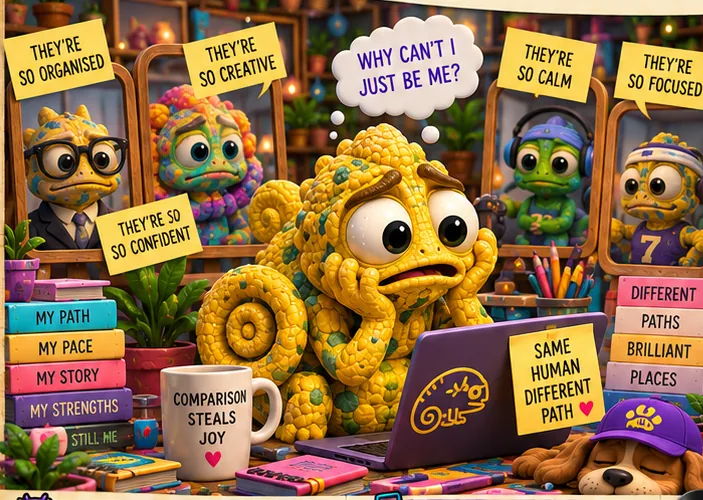
16 · Comparison Chameleon
A.K.A. Side-by-Side Saurus
Comparison Chameleon shows up when I measure myself against others. It can make me doubt my progress, minimise my achievements and feel like I’m falling behind. It thrives on social media, work milestones and seeing what others are doing, but it forgets that we all have different starting points, circumstances and timelines.
Watch for: Scrolling and comparing; Feeling like everyone else is coping better; Minimising your own progress; Perfectionism and self-doubt; Feeling stuck or demotivated.
Taming tools: Reality Check: Pause and question the comparison. What’s the full story? My Progress List: Keep a record of what you’ve achieved. Reframe and Reconnect: Turn comparison into inspiration. What can I learn from this? Limit Triggers: Take breaks from social media or people who trigger unhelpful comparison. Seek Support: Talk to trusted people who remind you of your strengths.
Spotted in the wild: Social media; Workplace and education settings; Seeing others’ milestones or success; Comparing productivity; During transitions or big life changes.
Barry says: “You are not too much. You are enough, exactly as you are.”

17 · The Imposter
A.K.A. Not-as-good-as-you-think
The Imposter can make me feel like I’m not as good as I think, that I’ve just been lucky, or that one day people will find out I don’t really belong. It can show up even when I’ve worked hard and achieved a lot. It feeds on self-doubt and comparison, but with the right tools I can challenge its stories, recognise my strengths and remember that I do belong exactly as I am.
Watch for: Doubting my achievements; Feeling like it’s just luck; Comparing myself to others; Discounting positive feedback; Worrying about being ‘found out’.
Taming tools: Evidence File: Keep a record of positive feedback, achievements and facts. Reality Reframe: Challenge the story — what else could be true? Talk It Out: Share how you feel with someone you trust. Self-Compassion: Speak to yourself like you would a friend. Celebrate You: Notice and acknowledge your progress, big and small.
Spotted in the wild: New roles or responsibilities; Sharing my work or ideas; Success or recognition; Being around high achievers; Transitions, change or new challenges.
Barry says: “You are enough. Exactly as you are.”
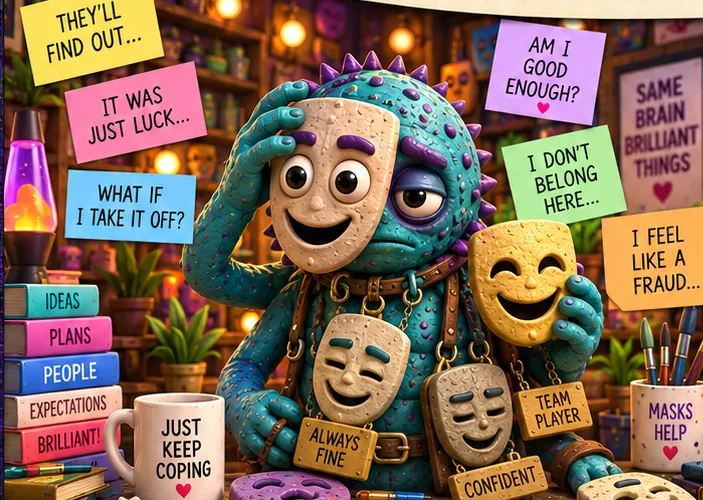
18 · Masking Monster
Masking Monster hides who I really am to fit what others expect. It can change my appearance, act differently and say what I think people want to hear. It helps me feel accepted and safe, but it can also be exhausting. After wearing masks for too long, I can forget which face is real. With the right support, I can let the real me show up, exactly as I am.
Watch for: Hiding true feelings; Changing behaviour to fit in; Feeling like a fraud; People-pleasing; Exhaustion after social situations.
Spotted in the wild: Social settings; Work, school or group environments; New people or unfamiliar places; Success or recognition; During transitions or big life changes.
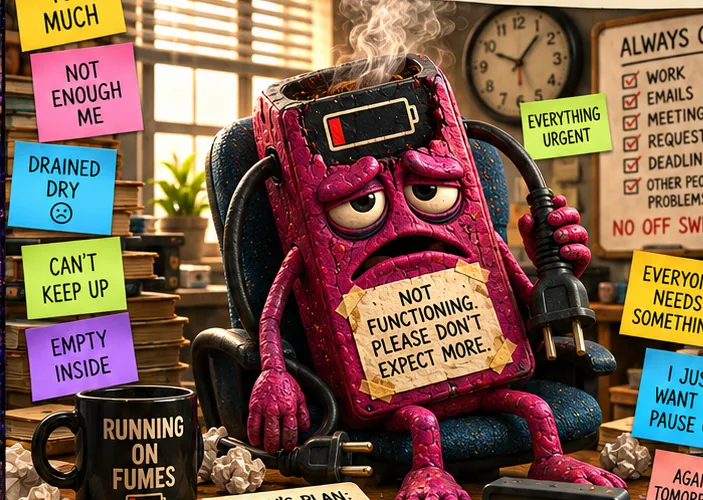
19 · Burnout Monster
Burnout Monster runs on empty and can’t recharge. Everything feels too much. It can struggle to keep up with demands, even when it cares. It makes me feel drained, exhausted and like I’m letting people down.
Watch for: Feeling overwhelmed; Taking on too much; Struggling to rest or switch off; Guilt when stopping; Exhaustion after busy periods.
Spotted in the wild: Work or study environments; Back-to-back commitments; Supporting others; When everything feels urgent; Transitions, deadlines or big life changes.
Barry says: “Rest today so you can shine tomorrow.”
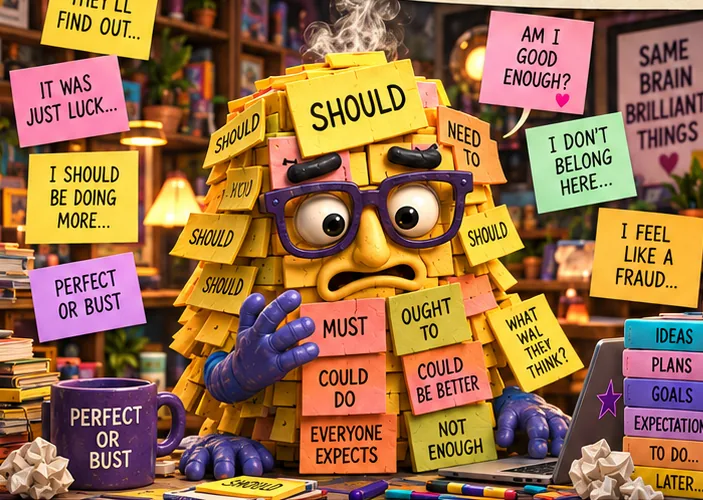
20 · Should Monster
A.K.A. Guilt Generator
Barry says: “Perfect doesn’t belong here. You do. Exactly as you are.”
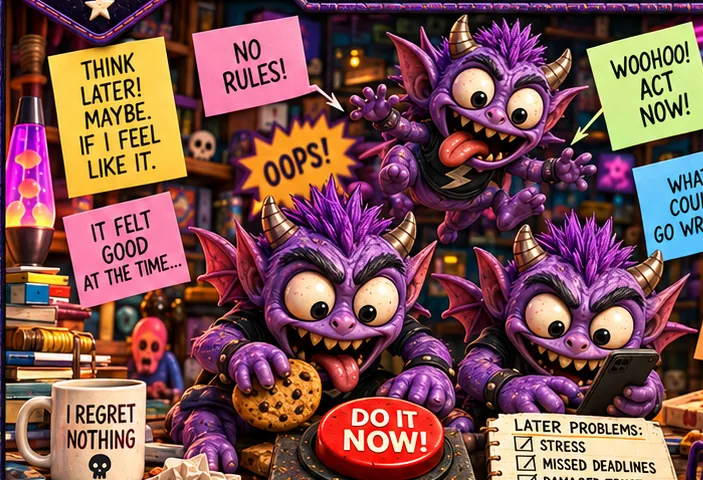
21 · Impulse Control Imps
Act first. Think never. Regret always.
Impulse Control Imps act first and can’t think ahead. Everything feels exciting, novel and instant rewarding. It can be hard to pause before acting, even when it might cause problems. It can lead to regret, missed opportunities and extra stress. With the right support, these Imps can learn to slow down, notice choices and build routines that help them make decisions they feel good about.
Watch for: Acting without thinking; Interrupting or blurting out; Making snap decisions; Chasing instant rewards; Regret afterwards; Struggling to pause or wait.
Spotted in the wild: Social settings; School, work or group environments; Shopping or spending.
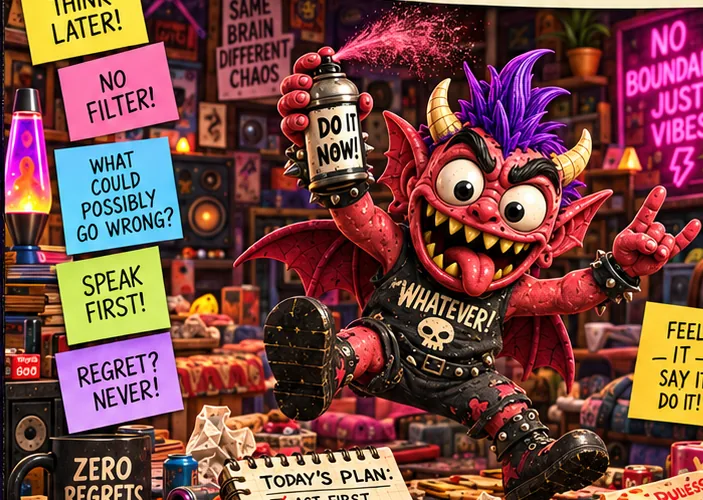
22 · Disinhibition Demon
A.K.A. Impulse Detonator
Barry says: “Pause today so you can enjoy more tomorrow.”
Where a booklet page repeats text written for another Monster, only the part written for that Monster is shown here.