When people ask me what changed after I was diagnosed with ADHD, they sometimes expect a dramatic answer. They imagine that suddenly everything fell into place, that years of confusion disappeared overnight and that I finally understood myself.
The truth is much less dramatic than that. The next morning I woke up exactly the same person I’d been the day before.
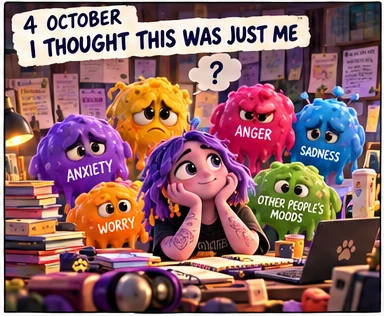
I still forgot where I’d put my keys. I still had too many ideas before breakfast. I still found myself halfway through one job before another one caught my attention. The Monsters hadn’t packed their bags and moved out just because somebody had finally given them a name.
Nothing about me had changed. What changed was the story I was telling myself.
For most of my life, I’d assumed all those little moments were simply evidence that I wasn’t trying hard enough. If I forgot something important, I needed to be more organised. If I left things until the last minute, I needed to be more disciplined. If I interrupted someone because I was frightened I’d lose the thought, I needed to be more patient. Every difficulty came with an assumption that I ought to be able to do better if I just made more of an effort.
It’s surprisingly hard to be kind to yourself when you spend years believing you’re constantly falling short of standards that everyone else seems to manage without thinking.
The diagnosis didn’t give me permission to stop trying. It gave me permission to stop blaming.
Looking back now, I can see the clues everywhere. The notebooks that gradually turned into mind maps. The project folders that multiplied because every new idea deserved somewhere to live. The whiteboards covered in arrows that looked completely chaotic to everyone else but somehow made perfect sense to me. The collection of fidget toys that kept growing because different days seemed to need different textures, different movements and different kinds of sensory feedback. None of those things suddenly appeared after my diagnosis. They’d been quietly helping me for years without either of us really understanding why.
Perhaps that’s what surprised me most. I’d already spent a lifetime adapting. I just hadn’t realised that’s what I was doing.
Once I understood my ADHD, those adaptations stopped feeling like odd little habits and started making sense. My whiteboards weren’t evidence that I couldn’t organise my thoughts. They were one of the ways I organised them. My endless notes weren’t a sign that my memory was failing. They were an extension of it. Even my habit of reaching for a particular fidget before an important meeting wasn’t random. My brain was instinctively choosing the kind of movement and sensory input it needed to concentrate.
I still have difficult days. There are still mornings when the Monsters seem to have held a planning meeting before I’ve even had my first cup of tea. There are still times when I forget things, become overwhelmed or disappear down a side quest that seemed like an excellent idea at the time.
The difference is that I don’t automatically assume those moments say something about my character anymore. They’re simply information.
They tell me I probably need to slow down, reduce the number of open threads, ask for a bit of help or be a little kinder to myself than I might once have been.
That has probably been the biggest gift of understanding my own brain. Not perfection. Perspective.
If you’ve recognised yourself in this first week, whether you have an ADHD diagnosis or not, I hope you take one thing away from these pages. Understanding yourself isn’t about collecting labels. It’s about replacing judgement with curiosity.
Curiosity asks, ‘I wonder why that happened?’ Judgement says, ‘There you go again.’ One of those questions opens a door. The other quietly closes it.
If there’s one thing Barry, the Monsters and a rather tangled web have taught me over the years, it’s that curiosity nearly always takes you somewhere more interesting.
And that’s probably a good place to leave our first week. The Monsters will be back tomorrow. After all, they wouldn’t want us getting too comfortable.