
Evolution not Revolution
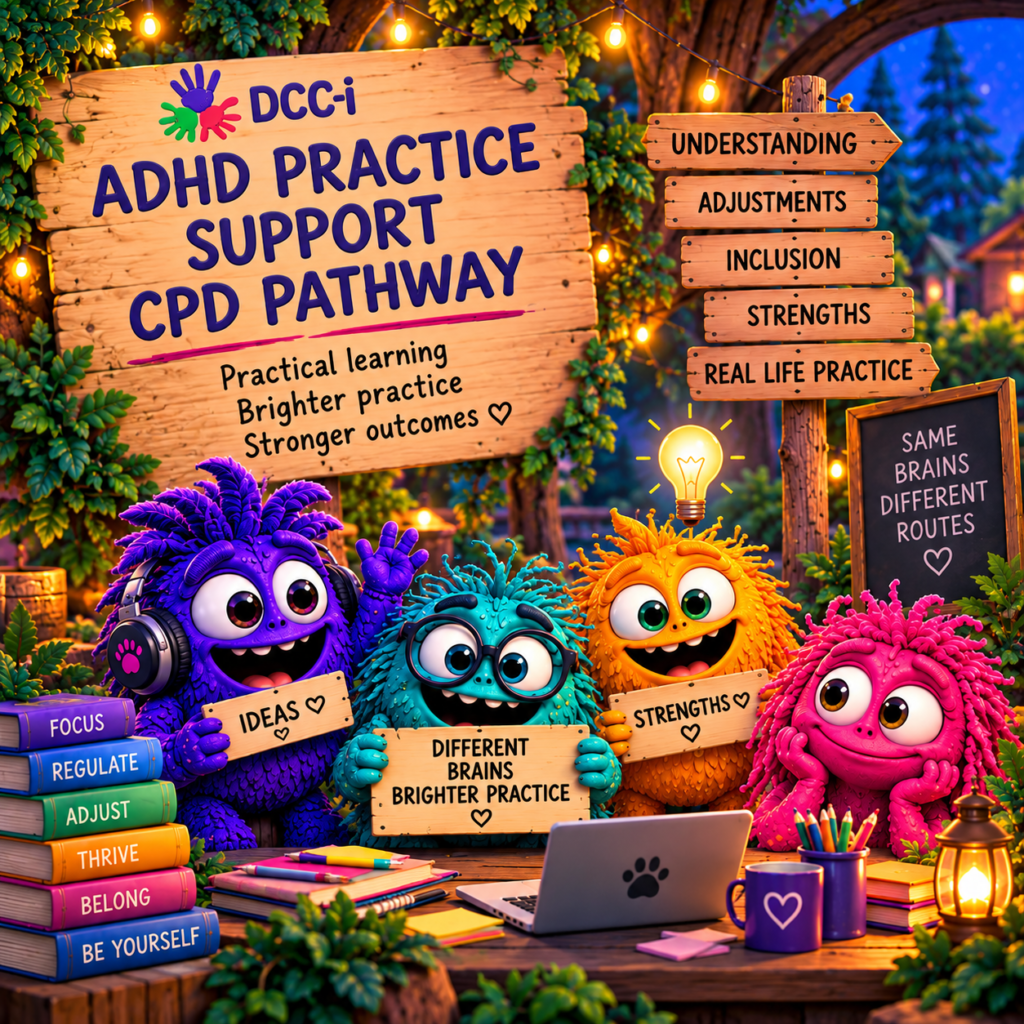
ADHD in Practice: From Curiosity to Defensible Practice
Recognise. Understand. Adjust. Respond. Review. Apply.
- 3 hours CPD
- 6 stages
Free with a Portal account
Free with a Portal account. New to the Portal? You can create a free account from the sign-in page, and you will come straight back to the first stage.
This 3-hour self-directed CPD pathway guides you through six connected stages of ADHD-informed everyday practice. Separate observation from assumption, explore the whole experience, agree practical adjustments, respond to misunderstandings and review what helps. The pathway combines fictional cases, choices with feedback and written reflection, finishing with Rowan’s adult-learning and employment-support case. The timings include reading, choices, reflection and review; take breaks whenever you need them.
Who it is for
- Practitioners
- Supervisors and managers
- Teams
- Students and newly qualified
- People, families and carers
What you will be able to do
- Describe ADHD as a neurodevelopmental condition, recognising the diversity of presentation across childhood and adulthood and challenging common myths and stereotypes.
- Recognise how ADHD may present in everyday life and professional practice, including differences associated with executive functioning, attention regulation, impulsivity, hyperactivity and motivation.
- Explore the impact of emotional regulation, rejection sensitivity, hyperfocus, masking and compensatory strategies on an individual’s experiences, relationships and engagement with services.
- Consider ADHD within assessment and formulation, recognising the importance of developmental history, context, strengths, co-occurring needs and the potential overlap with trauma and other presentations.
- Analyse how environments, systems and professional responses can create or increase barriers for people with ADHD, including where behaviour may be misinterpreted or needs overlooked.
- Identify and apply practical, neuroaffirming adjustments to communication, assessment, planning and professional practice that reduce barriers and support participation.
- Apply ADHD-informed reasoning to realistic practice situations, moving beyond diagnostic labels to consider the individual, their circumstances, strengths, needs and environment.
- Critically reflect on their own practice and identify specific changes that will strengthen inclusive, neuroaffirming and person-centred work with people with ADHD.
What you will explore
Stage 1: Recognise
See beyond the stereotype
Stage 2: Understand
Listen to the whole experience
Stage 3: Adjust
Make participation easier.
Stage 4: Respond
Rethink everyday misunderstandings.
Stage 5: Review
Find out what actually helps
Stage 6: Apply
From assumption to defensible practice